
💼 Start Your Own Online Store with Shopify
Ready to turn your business idea into income? Build your own professional online store with Shopify — the world’s leading e-commerce platform trusted by millions of entrepreneurs.
✔️ Easy to set up — no coding needed
✔️ Secure payments & powerful analytics
✔️ Sell physical or digital products globally
✔️ 24/7 support and free trial included
We use Shopify to power CFTDirect.com— and you can too.
Click below to start your free trial and launch your store today 👇
Forex Strategy & Execution-There is no Hope in Forex
Forex Strategy & Execution – Why You Should Never Hope in Forex
✔ Strategy & Execution
Always trade with a predefined plan (entry, stop-loss, take-profit, and risk per trade).
Stick to a consistent strategy — avoid switching methods after every loss.
Use risk-to-reward ratios that make mathematical sense (e.g., 1:2 or better).
Trade only when your setup appears, not when you feel like taking a trade.
Backtest your strategy to build confidence and remove emotional guesswork.
Execute based on signals, structure, and confirmations — not emotions.
Journal every trade to identify patterns and improve over time.
Prioritise high-probability trades, not high-action trading.
Have a weekly plan that includes economic events, sessions, and key market levels.
Treat trading like a profession — systems first, emotions never.
❌ Why You Should Never Hope in Forex
Hope is not a strategy — the market doesn’t care about your feelings.
Hoping causes you to hold losing trades longer, increasing drawdown.
Hope leads to moving stop-losses or trading without one at all.
It makes you chase losses, turning one bad trade into a blown account.
Hope stops you from accepting reality — the market can go wherever it wants.
Hoping removes objectivity, replacing it with emotional attachment.
Traders who hope rely on luck, not skill — and luck always runs out.
Hope blinds you from cutting losses early, a key principle of longevity.
Hope causes over-leveraging, trying to “make it back” in one trade.
The market rewards discipline and risk management — not hope.
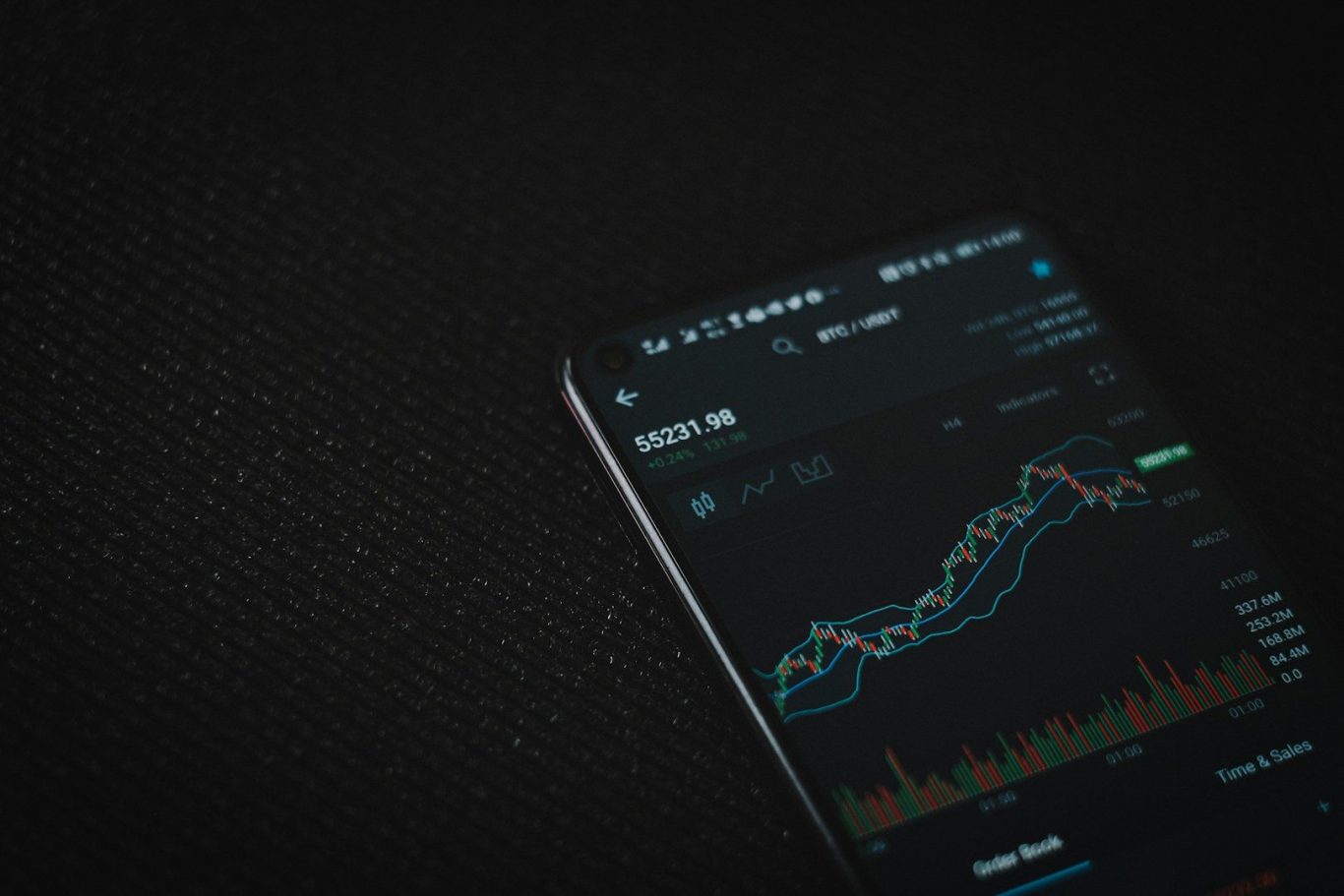
Learn Forex Globally with Chestnut Field Trading Limited
Learn to Trade Forex Globally with Chestnut Field Trading Limited
At Chestnut Field Trading Limited, we specialise in helping beginners and aspiring traders gain the knowledge, skills, and confidence to trade forex with clarity and discipline.
Why Choose Forex Education with Chestnut Field Trading Limited?
Global Advantage
Expert Training – Learn the strategies, tools, and techniques used by professional traders, with step-by-step guidance.
Hands-On Coaching – We provide one-to-one and small-group sessions, tailored to your pace and level of experience.
Risk Management & Psychology – Trading isn’t just about charts; it’s about protecting your capital and controlling emotions. We show you how to trade smart, not reckless.
Flexible Programs – Whether you’re a complete beginner or already trading, we have structured coaching packages designed for you.
What You’ll Learn
✔️ How the forex market works
✔️ How to analyse charts and price movements
✔️ Risk and money management strategies
✔️ Trading psychology to master discipline
✔️ How to build and test your own trading plan
✔️ Practical tools – templates, cheat sheets, calculators
Who We Work With
Our programs are open to:
Students and professionals All over the world
Entrepreneurs and business owners across the globe seeking to diversify income.
Anyone with the drive to learn forex and the discipline to trade responsibly.
Take Your First Step Today
Forex trading is a skill that, once mastered, can stay with you for life. With the right education and support, you can build confidence, develop discipline, and create new opportunities.
📍 Based in Rugby England, serving Globally
🌐 Explore our training programs at Chestnut Field Trading Limited
📧 Contact us today at CFTDirect.com to start your journey.
Chestnut Field Trading Limited – Your Growth is Our Priority.
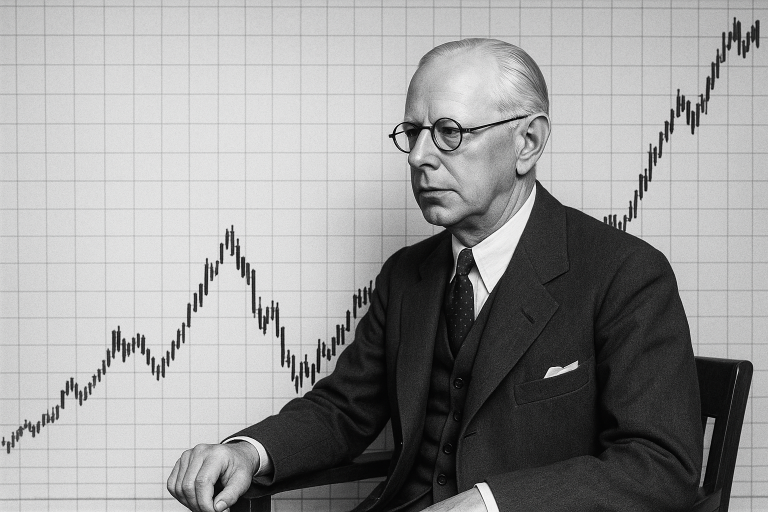
Jesse Livermore
Jesse Livermore rules for trading
Jesse Livermore, one of the most legendary traders of the early 20th century, developed timeless rules that continue to influence traders today. His principles were based on hard-earned experience, both successes and failures. Here are some of his key trading rules:
Follow the trend – “The trend is your friend.” Trade in the direction of the overall market movement.
Don’t trade every day – Only trade when the odds are clearly in your favor.
Be patient – Wait for the right setup, and once in, allow profits to grow.
Cut losses quickly – Never let small losses become big ones.
Let profits run – Don’t exit too early. Ride the trend until it shows signs of reversing.
Use stop-loss orders – Always protect your downside.
Avoid overtrading – Don’t risk capital unnecessarily or trade for excitement.
Keep emotions out of trading – Discipline outweighs excitement or fear.
Do not average down – Never add to a losing position.
Trade based on your own analysis – Don’t follow tips or rumors.
Study market history – Markets repeat patterns. Learn from the past.
Focus on leading stocks – Trade strong stocks in strong sectors.
Master timing – Buying or selling at the right time is crucial.
Develop a plan and stick to it – Discipline and consistency are essential.
Learn from your mistakes – Self-review helps refine your trading edge.
Livermore’s legacy proves that trading success lies in mastering psychology, discipline, and patience.
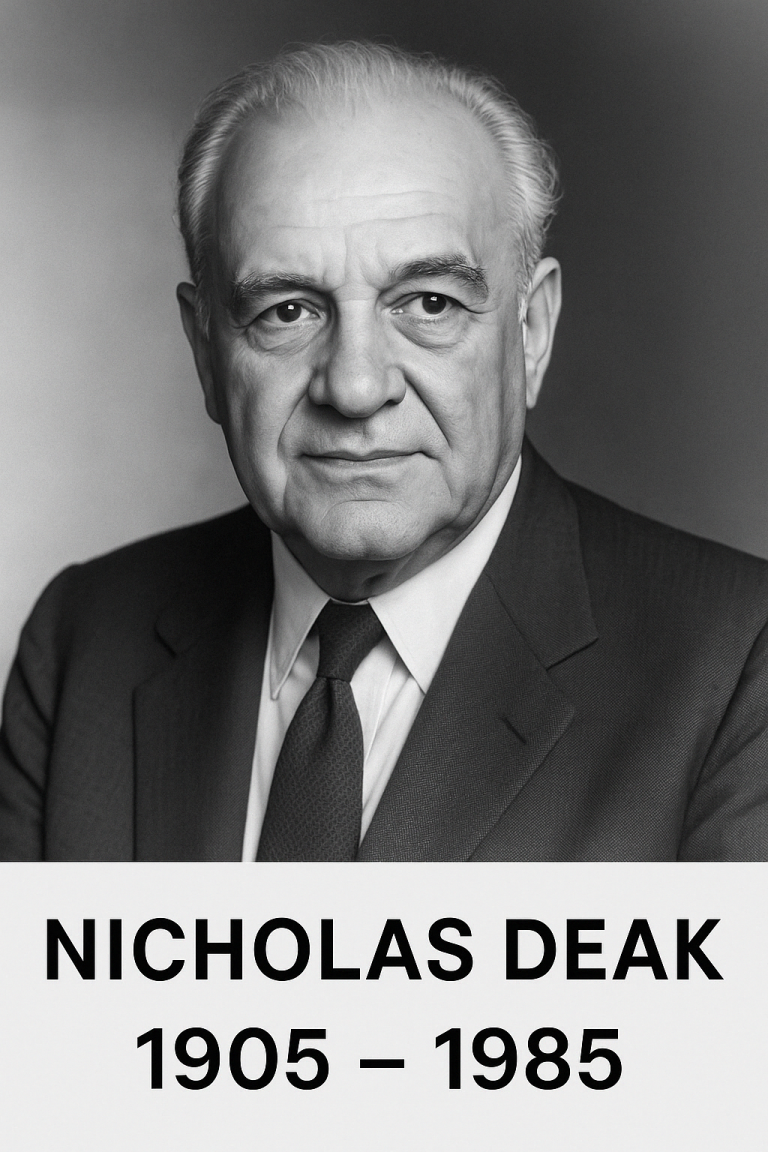
Legacy of a Forex Pioneer: Nicholas Deak
Nicholas Deak (often spelled Deák) was a significant figure in the world of foreign exchange and international finance, and he's arguably one of the most influential forex-related personalities.
At Chestnut Field Trading Limited, we honor the pioneers who paved the way for modern foreign exchange markets. One such figure is Nicholas Deak (1905–1985) — a legendary banker, entrepreneur, and intelligence officer whose contributions shaped the early foundations of global currency exchange.
Why Nicholas Deak Matters to Us:
Founder of Deak & Co., one of the first companies to offer international currency and gold exchange outside of central banks.
Helped normalize forex trading for institutions and individuals before forex became fully decentralized in the '90s.
Served in the OSS (the predecessor to the CIA), bridging intelligence and financial expertise — a true strategist.
Deak & Co. once handled billions in foreign exchange transactions across the globe.
What We Learn From Him:
Innovation: Deak stepped outside traditional finance and created access where it didn't exist.
Discipline & Global Vision: His global mindset is something we mirror when teaching traders to think beyond borders.
Courage Under Pressure: From intelligence missions to running a financial empire, Deak’s legacy reminds us that risk and reward walk hand-in-hand.
"To trade is to take a calculated risk. To lead in trading is to redefine the market."
— Inspired by Nicholas Deak
Join Chestnut Field Trading and carry forward a legacy of bold, disciplined, and globally-minded trading.

Fundamental Analysis Vs Technical Analysis-Forex Trading
Differences Between Technical and Fundamental Analysis in Forex
Forex traders use two main approaches to analyze the market: technical analysis and fundamental analysis. Both methods aim to predict price movements, but they differ in their focus, tools, and application.
1. Definition & Focus
Technical analysis is the study of historical price movements and market data to predict future trends. It relies on charts, patterns, and indicators to identify potential trade opportunities. On the other hand, fundamental analysis examines economic, financial, and geopolitical factors that influence currency value, such as interest rates, inflation, and central bank policies.
2. Data Used
Technical traders use price charts, volume, and technical indicators like moving averages, Relative Strength Index (RSI), Fibonacci retracements, and Bollinger Bands. They assume that past price movements can help predict future behavior.
Fundamental traders analyze economic reports, employment data, GDP growth, central bank decisions, and political events. They assess the strength of a country’s economy to determine if its currency is undervalued or overvalued.
3. Time Horizon
Technical analysis is more commonly used for short-term trading, such as scalping, day trading, and swing trading. It helps traders identify entry and exit points quickly. Fundamental analysis, however, is often used for long-term investments and position trading, as economic changes take time to impact the market.
4. Market Reaction & Trading Style
Technical traders base their decisions on market sentiment, trends, and patterns, reacting to price action rather than external events. Fundamental traders make decisions based on economic strength and policy changes, often holding trades for longer periods.
Conclusion
Both methods have their strengths and weaknesses. Many successful traders combine technical and fundamental analysis to get a broader market perspective and make more informed trading decisions.
Ichimoku Cloud Indicator
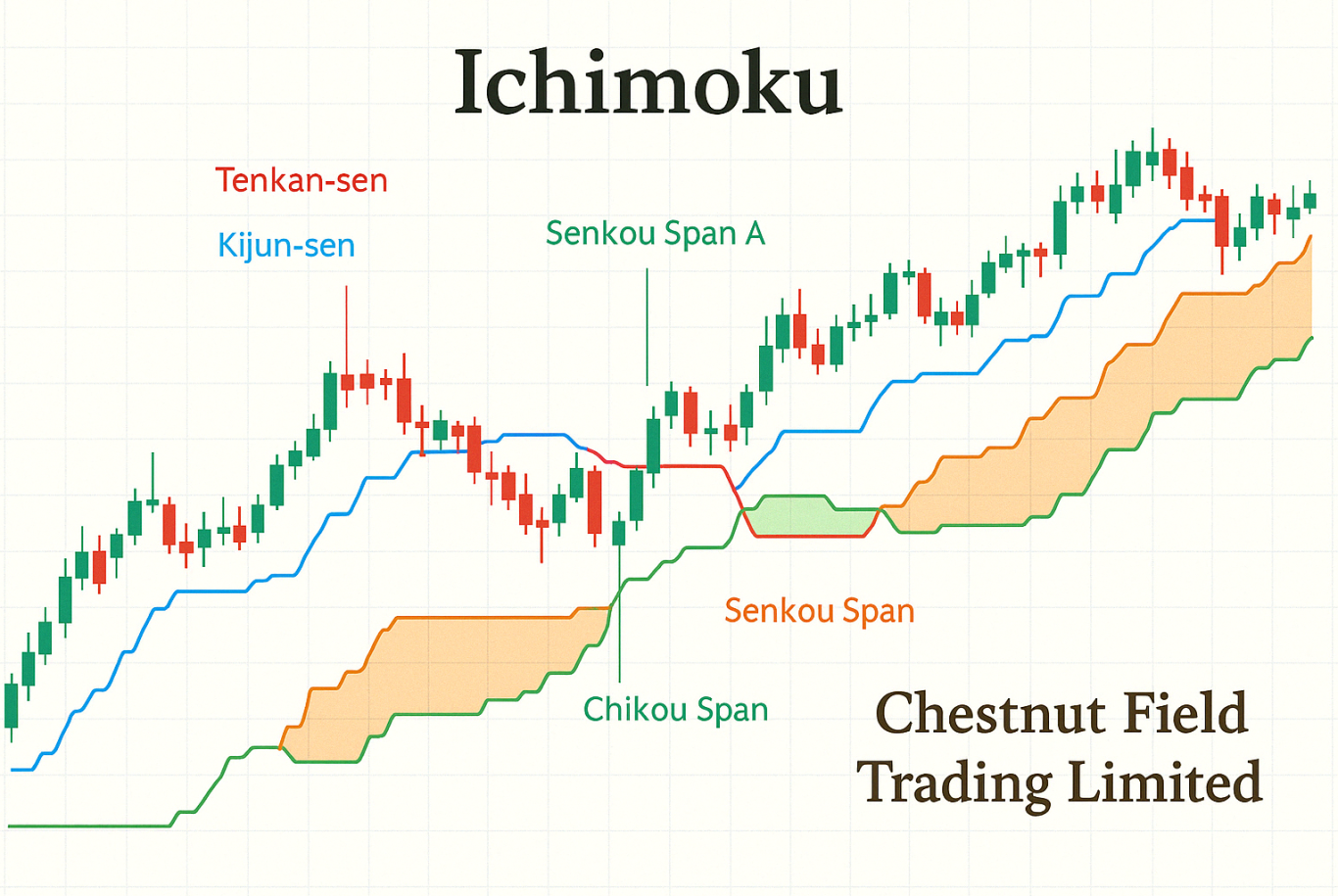
Ichimoku Cloud Indicator
The Ichimoku Cloud, or Ichimoku Kinko Hyo, is a comprehensive technical analysis indicator that provides insights into trends, momentum, and potential support and resistance levels. Developed by Japanese journalist Goichi Hosoda in the late 1960s, it is widely used in forex, stocks, and commodities trading.
Components of the Ichimoku Cloud
- Tenkan-sen (Conversion Line) – The average of the highest high and lowest low over the last 9 periods. It indicates short-term momentum.
- Kijun-sen (Base Line) – The average of the highest high and lowest low over the last 26 periods. It serves as a confirmation line and medium-term trend indicator.
- Senkou Span A (Leading Span A) – The average of the Tenkan-sen and Kijun-sen, plotted 26 periods ahead. It forms one boundary of the cloud.
- Senkou Span B (Leading Span B) – The average of the highest high and lowest low over the past 52 periods, plotted 26 periods ahead. It forms the other boundary of the cloud.
- Kumo (Cloud) – The space between Senkou Span A and Senkou Span B. A green cloud signals a bullish trend, while a red cloud indicates a bearish trend.
- Chikou Span (Lagging Span) – The current closing price plotted 26 periods behind. It helps confirm trends.
How Traders Use the Ichimoku Cloud
- Trend Identification – When the price is above the cloud, it signals an uptrend; below the cloud, a downtrend; and inside the cloud, a period of consolidation.
- Support and Resistance – The cloud acts as dynamic support or resistance, with thicker clouds offering stronger barriers.
- Trading Signals – A bullish crossover occurs when the Tenkan-sen crosses above the Kijun-sen, while a bearish crossover happens when it crosses below.
The Ichimoku Cloud is a powerful tool for traders seeking a holistic view of market trends and potential trade setups.

The Benefits of Making Smart Choices in Business and Trading
In both business and trading, the importance of making smart choices cannot be overstated. Smart decisions are the backbone of success, leading to growth, profitability, and sustainability. In business, every decision — from resource allocation to market strategy — impacts the bottom line. Thoughtful choices ensure that resources are used efficiently, risks are minimized, and opportunities are maximized. Entrepreneurs who consistently make informed decisions gain a competitive edge, foster innovation, and build strong, resilient companies.
In trading, smart choices are essential due to the market's volatile nature. Traders who conduct thorough research, apply sound risk management strategies, and remain disciplined in their approach can achieve consistent returns. Making well-informed decisions helps traders avoid emotional pitfalls such as fear and greed, which often lead to losses. Instead, strategic choices based on data and analysis enhance profitability and reduce exposure to unnecessary risks.
Moreover, making smart choices fosters long-term growth. Businesses and traders who prioritize strategic planning, adapt to market trends, and continuously seek knowledge are more likely to thrive. Smart decisions also build trust with stakeholders, including investors, clients, and employees, enhancing reputation and credibility.
Ultimately, success in business and trading hinges on the ability to make well-considered choices. The benefits include financial stability, growth, risk mitigation, and the ability to seize opportunities as they arise. By consistently making smart decisions, businesses and traders set themselves up for enduring success in an ever-changing environment.
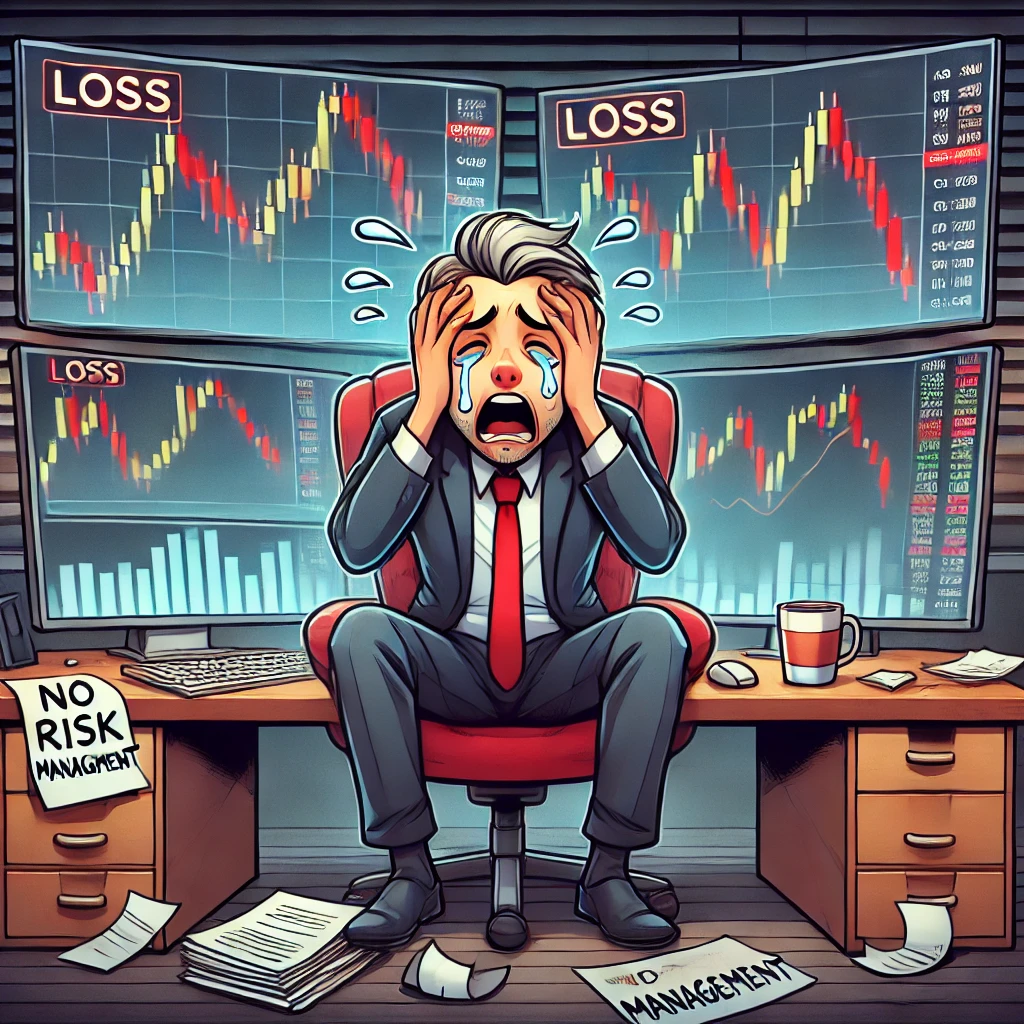
Risk Management: An Essential Practice in Finance
Risk management is the process of identifying, analyzing, and mitigating potential risks that could negatively impact an organization’s financial health, operations, or reputation. In finance, where uncertainty is inherent, effective risk management is crucial for safeguarding investments and ensuring long-term growth.
At its core, risk management involves assessing both the likelihood of adverse events and their potential impact. This process allows businesses and investors to develop strategies that minimize losses while maximizing potential gains. Common financial risks include market risk, credit risk, liquidity risk, and operational risk. Market risk arises from fluctuations in asset prices, interest rates, or exchange rates, while credit risk stems from borrowers defaulting on their obligations. Liquidity risk involves the inability to quickly convert assets into cash, and operational risk is linked to internal failures such as system breakdowns or human errors.
The risk management process typically follows several key steps: identifying potential risks, assessing their impact, prioritizing risks based on their severity, implementing mitigation strategies, and continuously monitoring and reviewing risks. Techniques such as diversification, hedging, and the use of derivatives are commonly employed in financial risk management.
A well-structured risk management framework not only protects businesses from unforeseen losses but also enhances decision-making by providing a clearer understanding of potential outcomes. For financial traders and firms, effective risk management can be the difference between success and failure, especially in volatile markets like Forex trading.
Ultimately, risk management is not about eliminating all risks but about making informed decisions that balance risk and reward. In today’s complex financial landscape, it remains a cornerstone of prudent financial practice and sustainable business growth.